Monday, March 25, 2013

Life Cycle Analysis: Zippo Lighters

Here, we will be examining the production of the brass body of a Zippo lighter.

Disposable lighters are made with a plastic body and are discharged when lighter fluid is used up.  Zippo lighters on the other hand are reusable and have a life time guarantee.  Instead of throwing away a lighter when it runs out of fuel, a Zippo lighter can be refueled and reused.  This cuts down on a significant amount of waste in landfills and moreover, nearly 90% of all brass alloys are recycled.

Brass is an alloy of copper and zinc.  It has a relatively low melting point (900-940 degrees Celsius) which makes it a easier and more efficient substance to mold compared to denser metals.Brass is malleable yet strong and corrosion resistant, making it ideal for Zippo lighters.

Zippo's manufacturing plant is in Bradford Pennsylvania.  Therefor it is most sustainable for their company to get their materials from a relatively nearby mine in order to cut down on transportation costs and fossil fuel consumption.

The United States is produces about 65% of it's copper that it consumes.  The United States is the fourth largest producer and has the fourth largest reserves globally.  This means two things, that it is most likely that Zippo gets it's copper domestically and that it is likely to do so for a long time.

Nearly 80% of zinc around the world is mined underground, a relatively eco-friendly method of mining although it requires much more manual labour.  Underground mining still has it's challenges like ventilation so that workers are less exposed to toxic chemicals and also ground support so the workers aren't crushed by the earth above them.
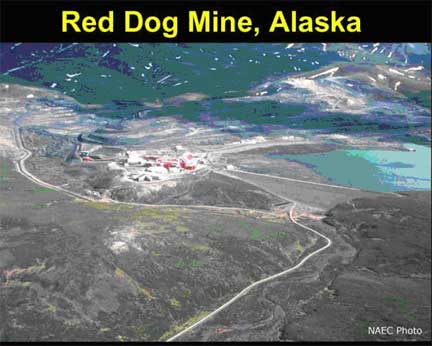
Zinc is also a major resource mined in the United States.  The Red Dog Mine in Alaska is the largest zinc mine in the world aiding the United States to produce the fourth largest amount of zinc in the world.  Although the majority of zinc mines are underground mines, the Red Dog Mine is an open pit mine because the valuable ore's are found close to the earths surface.

Sunday, March 24, 2013

Fact Sheet

In ENP 250 we have been focusing on making a fact sheet pertaining to specific environmental issues.  I choose global warming for my assignment.  There are multiple challenges with creating a fact sheet.  First off it must be aesthetically pleasing because without the reads initial attention your fact sheet will not be read.  Therefor the fact sheet must have a clear format, coordinated color scheme and 'eye catching' pictures or other visuals.  The information must be very concise and appeal to a specific audience.  For instance if you were making a fact sheet on the perils of eating play doh , your language would need to be extremely basic to appeal to a much younger audience.
To aid in achieving all these aspects we had multiple peer review sessions to gain insight on improvements that could be made.  I was unable to get specific advice on my fact sheet due to technical difficulties in the printing process.  Regardless, I gained a great deal of understanding of the subtleties in a successful fact sheet by review of my peer's works.  It gave me a lot of good ideas of what I could do with my fact sheet.  In fact, there was one fact sheet I read in particular that was the basis for the format I used in my fact sheet.  This collaboration process improved my fact sheet a great deal.

Problems in Sustainability: Mountaintop Removal Mining Appalachian Mountains


Mountaintop Removal is an effective method of extracting coal seems.  Here, the surface above the coal (mountain) is cleared so that the coal can be removed.  It is done this way on mountains because it is the most economically feasible method.  The large amount of land above the coal in mountains pose challenges in the mining process and therefore the mountain top is cleared.  The primary method of coal mining in the United States is underground mining.  But this mothod is very labor extensive.  By utilizing machinery and explosives the overburden to clear the mountain top, the mining process is much more efficient. 
This is an unsustainable practice for three reasons. 1) Coal is a has limited reserves on this earth, and if we continue to consume coal at current rates future generations will not have access to this critical fossil fuel. 2) The process of burning coal and other fossil fuels for energy pollutes the environment.  3) Mountaintop Removal Mining in particular is disastrous to adjacent ecosystems and communities.

A significant amount of deciduous forests are destroyed along the Appalachian Mountains due to this mining practice.  These mountains are homes for a large amount of endangered species, further pressing species to extinction.  Transport machines rip up and damage plants and grasses, destroying habitat as well increasing surface runoff, erosion and more.  The byproduct of the overburden removal are frequently dumped into nearby valleys, filling up a significant amount of streams and by doing so permanently destroying ecosystems and polluting water with toxic chemicals.  The fact is that every ecosystem is infinitely interconnected.  Removal of a mountain top therefor effects an ecosystem in an infinite number of ways, the majority of which are hard to quantifiable measure but have pronounced long term implications.  If we are going to live sustainable as a species, we must not dominate nature but work with it.
url.jpg

Haiku

Big and productive
The smokestacks of progress spew.
Can we sustain this?


url.jpg